Skip to content

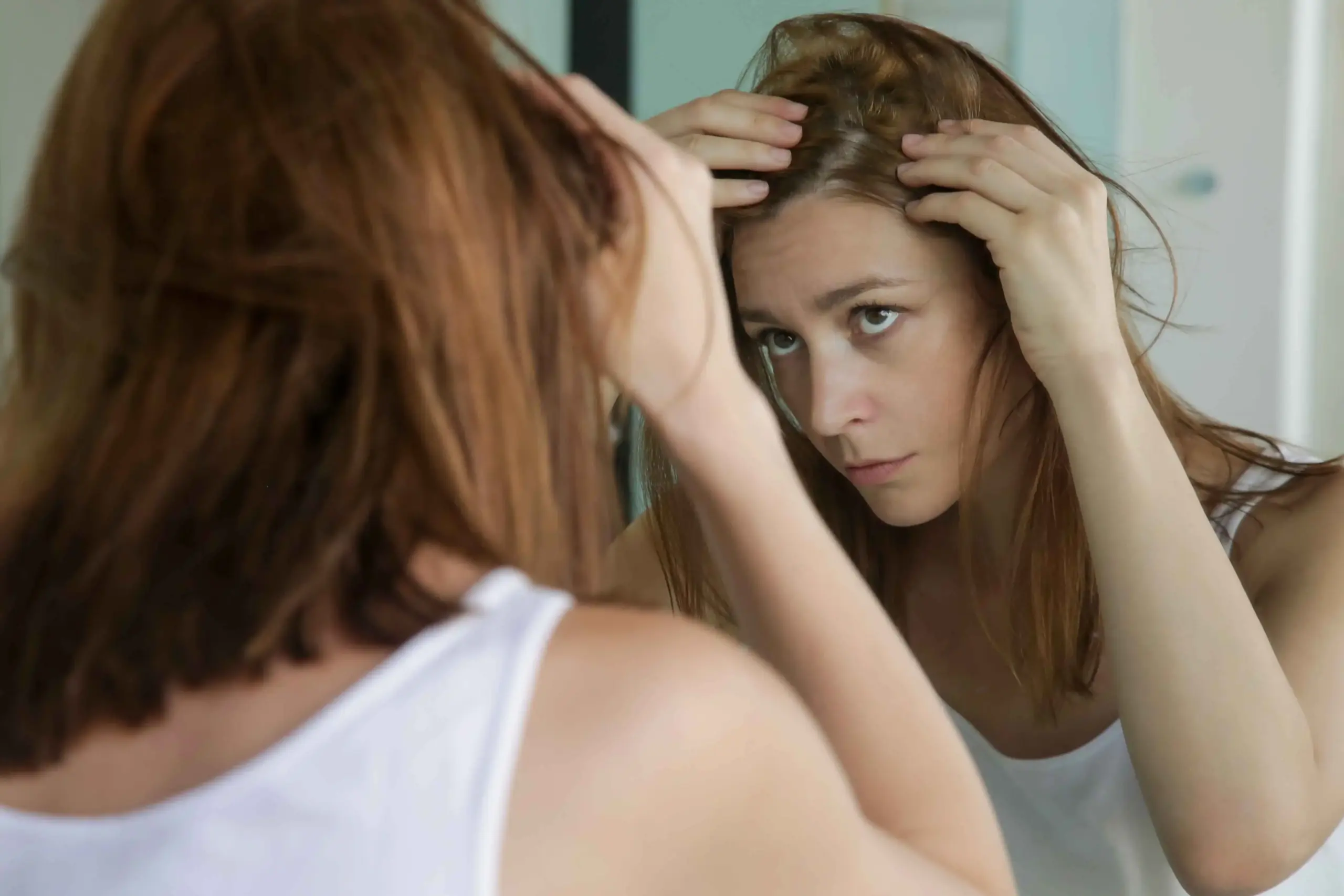
Table of Contents
Hair loss in women rarely announces itself. It shows up as a wider part, a thinner ponytail, or more strands in the drain than usual. Most female hair loss has an identifiable cause, and that cause points directly to what will help.
At Nuovo Te, we see women across Madison and Janesville who have already tried a new shampoo and a vitamin before asking anyone about it. This guide covers the causes of hair loss in women and the options worth considering once you know what is behind it.
What causes hair loss in women?
Hair loss in women is usually driven by hormonal changes, stress or illness, low iron or vitamin levels, inherited thinning, or constant tension on the hair. Each one behaves differently, so a provider typically looks at your scalp and your recent lab results before suggesting which treatment direction makes sense.
Why Hair Loss in Women Looks Different Than It Does in Men
Hair loss in women usually appears as diffuse thinning across the top of the scalp rather than a receding hairline or a bald crown. The part widens, crown density drops, and the hairline generally stays put.
Two related problems get grouped together here. Shedding is hair leaving the scalp faster than usual. Hair thinning in women is hair growing back finer with each cycle. Since losing some hair daily is normal, the real signal is a change from your own baseline: scalp showing through where it never did, or weeks of heavier shedding.
Hormonal Shifts Are the Most Common Cause
Hormonal hair loss in women is the most frequent explanation we encounter. Postpartum shedding, perimenopause, menopause, starting or stopping hormonal birth control, and thyroid conditions all change how hair cycles.
Most follicles are growing hair at any given time while a smaller share rest. A hormonal shift pushes an unusually large group into the resting phase at once, and those hairs release together a few months later, well after the event that set it off.
Thyroid conditions are common in women and often go undiagnosed for years. A hormonal cause needs a provider to confirm it through bloodwork and decide how to manage it.
Sudden Shedding Usually Traces Back to Stress, Illness, or a Nutrient Gap
Sudden shedding is often telogen effluvium, a temporary disruption of the growth cycle that typically appears two to three months after the event behind it. Common triggers include:
- A high fever or significant illness
- Surgery or general anesthesia
- Rapid or substantial weight change
- A major emotional stressor
- Certain medications
Nutrient gaps belong in the same category. Low iron and ferritin, low vitamin D, and consistently low protein intake are frequent contributors, and each is identifiable through lab testing. This type of shedding often improves once the trigger has passed, though recovery varies.
Genetic Thinning Shows Up Slowly and Early
Female pattern hair loss, known clinically as androgenetic alopecia, develops quietly and can begin in a woman’s twenties or thirties. With no triggering event to point to, it often goes unrecognized for years.
The pattern is recognizable: a center part that keeps widening, reduced crown density, and an intact hairline. Family history on either side contributes. Female hair thinning of this type is progressive, which is not the same as untreatable, and earlier attention leaves more active follicles to work with.
Styling Tension and Scalp Health Play a Quieter Role
Styling habits contribute more often than people realize, though rarely as the whole story. Traction alopecia comes from sustained tension: tight ponytails, braids, extensions, and weaves worn the same way for months. Heat tools, bleaching, and chemical processing damage the strand rather than the follicle, which still reads as thinning. Seborrheic dermatitis and ongoing scalp inflammation also work against growth.
Treatment Options for Women, Matched to the Cause
Hair loss treatment for women starts with identifying the cause, because no single approach suits every type of loss. In practice, women’s hair loss sorts into a few paths:
- Hormonal or nutrient causes: lab testing first, then correcting what shows up
- Genetic thinning: long-term management, started as early as possible
- Tension or chemical damage: styling changes plus care that restores scalp condition
- Scalp health: topical and in-office support for circulation and follicle environment
Treating the wrong cause is why so many women feel nothing has worked. Most hair loss solutions for women perform best in combination and over months rather than weeks, and non-invasive scalp therapy is one option we walk through in a consultation.
What Non-Invasive Scalp Therapy Involves
In-office scalp therapy at Nuovo Te uses ultrasound technology to help plant-based topical serums reach the scalp and hair follicles, supporting circulation and overall scalp condition. Sessions are non-invasive, involve no downtime, and most clients find them comfortable.
Our Team reviews your history, your scalp, and any recent labs before recommending a plan. Hair grows slowly, so changes build across a course of sessions. Hair regrowth for women varies by person and by underlying cause, and no provider can promise a specific outcome. For women considering hair loss treatment in Madison, WI, scalp therapy is usually paired with other steps rather than used alone, which is how hair restoration for women works best.
Common Questions About Hair Loss in Women
Is hair loss in women reversible? Often, yes, depending on the cause and how long it has been present. Shedding from stress, illness, or a nutrient gap commonly improves once the cause is addressed. Genetic thinning is managed rather than cured.
How long does postpartum shedding last? It usually begins two to four months after delivery and settles within six to twelve months. Shedding past a year is worth evaluating.
Should I get bloodwork before trying a treatment? Usually, yes. Iron, ferritin, vitamin D, and thyroid panels often explain what products alone cannot fix.
Where Hair Loss Answers Actually Start
Hair loss in women comes down to a short list of causes: hormonal shifts, stress or illness, nutrient gaps, genetics, and tension or inflammation. Identifying which one applies to you is what makes treatment worthwhile, and that takes a scalp evaluation rather than another product off the shelf.
Ready to address thinning hair or hair loss? Schedule a consultation with Nuovo Te in Madison, WI, to explore personalized hair loss treatment options.